Action Verbs in English for Kids
Action verbs in english for kids are among the first words a child masters, usually by age two to three, because toddlers can act out run, jump, eat, and think before they can spell them. Across LearnLink lessons, our tutors help children build confident, everyday English step by step. With a practical set, your child builds simple sentences like "I run" or "She eats an apple" and starts speaking in full thoughts sooner. Here is a teachable list, organized by age, with easy ways to practise at home.
📥 Action Verbs Kids Can Practice
Act, say, and check off useful English verbs for home and lessons.
Leave your email — we'll send the PDF to your inbox.No spam — the PDF plus one short reminder. Unsubscribe anytime.
What Families Need to Know
An action verb names something you do. Point to the action, say the word, and the meaning is obvious — no translation needed. This is why action verbs in english for kids are the best starting point for a young learner: a child sees you jump, hears "jump," and the link forms at once.
You do not need grammar terms. Your child does not have to know the word "verb" to use ten of them. Focus on common, everyday actions first — the things your child already does every day. Reading, eating, walking, and playing come up a hundred times a day, so they get practised naturally.
Keep the set small to start. Five to ten strong action words your child can act out beat a long list they forget by bedtime.
A Starter Set of Action Words
Start with these core words and short examples before adding more specific vocabulary.
I run in the playground.
Can you jump high?
We read a short story.
Write your name here.
They play after school.
Draw a small house.
I eat breakfast at seven.
Drink water after sport.
Here is a practical list of common action words, grouped so you can pick a few at a time. Choose one group for the week and act each word out together.
Notice the sentences stay short: subject, verb, one object. That simple shape is enough for a child of five, and it grows easily later.
How to Use This at Home
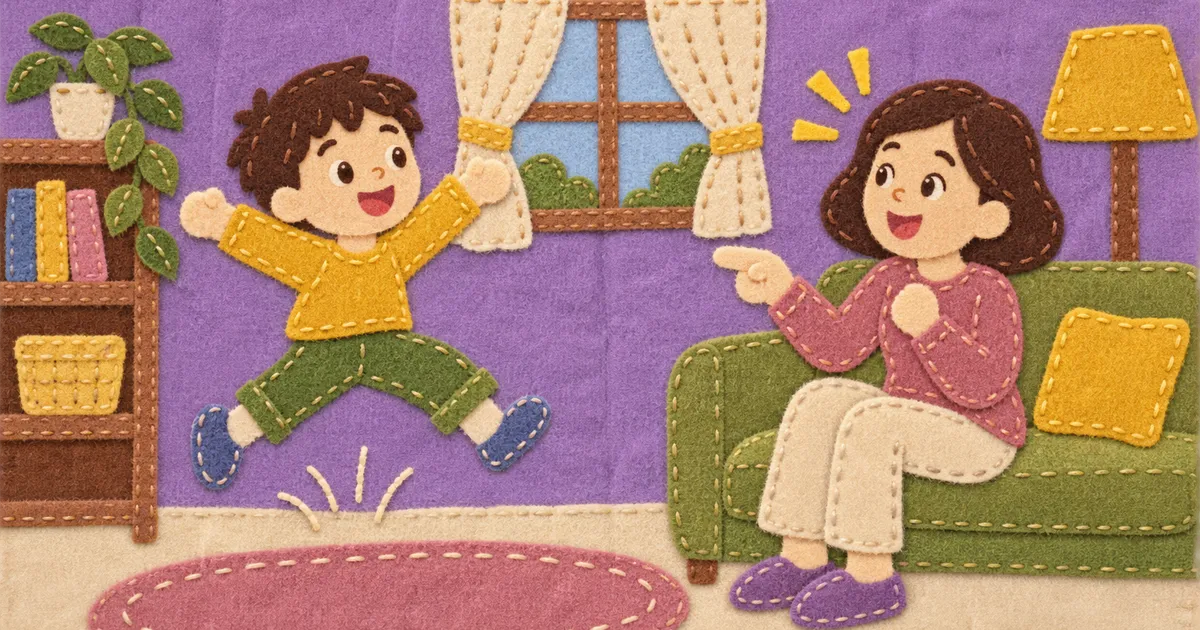
The fastest way to teach action verbs in english for kids is to narrate the action as it happens. When your child climbs the stairs, say "You climb." When they pour water, say "You pour." The word arrives at the exact moment of the action, which is how children learn their home language too.
Turn it into commands they enjoy following. "Jump!" "Clap!" "Sit down!" Your child moves, and the action word becomes a game instead of a lesson. Swap roles so your child gives you the commands — giving instructions forces them to produce the word, not just recognise it.
Add one small detail as your child grows: "Run fast," "Draw a blue fish," "Eat slowly." The core word stays the anchor while the sentence stretches.
Age-appropriate Examples
Children aged four to six learn best through the body. Keep to single-word commands and verbs they can perform: jump, hop, spin, hug, stomp. Pair each verb with a clear action and plenty of repetition across the day.
Children aged seven to ten can handle short full sentences and tense. Teach the simple present and past together: "I walk" / "I walked," "I run" / "I ran." Irregular past forms (go/went, eat/ate, run/ran) are worth a special mention because they do not follow the rule.
Older children, roughly eleven to fifteen, benefit from grouping action verbs in english for kids by topic — sports, cooking, school — and from spotting them in stories and videos they already watch. Ask them to list every action verb in one page of a book they like.
Regular and Irregular Action Words
One point confuses many families: how the past tense changes. Most action verbs just add -ed, but a small group of common ones change completely. This short comparison shows the difference so you can flag it early.
Teach the regular pattern first so your child has a reliable rule, then introduce two or three irregular verbs at a time as exceptions they simply memorise.
Practical Activities
These activities need no printouts and work for most ages. Each one gets your child saying the action word while doing it, which is what fixes the word in memory.
Four Action-Word Games for Home
Simon Says: call out actions — "Simon says jump," "Simon says clap." Your child performs the word they hear. Act and guess: your child mimes an action word and you guess it in English, then swap. Action hunt: during a cartoon or picture book, count every action you both spot. Daily diary: at bedtime your child names three things they did today — "I ran, I ate, I played" — building the past tense without a worksheet.
Keep each session to a few minutes and stop while it is still fun. Short, frequent practice beats one long drill.
- Pick five action words like run, jump, eat, sleep, and write for today's practice.
- Act out each word with your child and ask them to name it out loud.
- Play a simple game: say a word and have your child perform the action.
- Label a picture or flashcard for each new action verb you practice.
- Review the chosen verbs together before bedtime to reinforce memory.
For the rule wording, Wikipedia — English Grammar is a useful reference while the practice examples here stay adapted for children.
Frequently Asked Questions
How Many Action Verbs Should My Child Learn First?
Start with about ten that match your child's daily life — eat, sleep, run, play, read, draw, jump, sit, sing, walk. Once your child uses those in short sentences, add five more. A small, well-practised set of action verbs in english for kids is far more useful than a long list they cannot recall, so build slowly and repeat often.
At What Age Can We Begin?
You can begin as early as age four with single-word commands your child can act out, like "jump" or "clap." At this age the body does the learning, so keep it physical and playful. Reading and writing the verbs can wait until your child is comfortable saying and performing them.
Should I Correct My Child's Mistakes?
Repeat the correct form back naturally rather than stopping to correct. If your child says "I runned," reply "Yes, you ran fast!" Your child hears the right word in a positive sentence and absorbs it over time. Constant correction can make a young learner reluctant to speak at all.
Do We Need to Teach Grammar Terms?
No. A young child does not need the word "verb" or any grammar label to use verbs correctly. Focus on meaning and use — doing the action and saying the word. Formal terms are easier to introduce later, around ages nine or ten, once your child already uses the words with confidence.
A short one-to-one lesson can show what level and pace fit your child — book a trial English lesson.
Stay updated on our latest tips and resources by following us on Instagram LearnLink.